The scribe comes to Jesus asking, “Which is the first of all the commandments?” This at first looks like it will be an attack on Jesus. Because he is a scribe, one of the lawyers expert in the law of Moses who were most often seeking to discredit Jesus, we assume that he is trying to trap Jesus. Perhaps deep in the scribe’s heart, though, there was a sincere seeking of information and understanding.
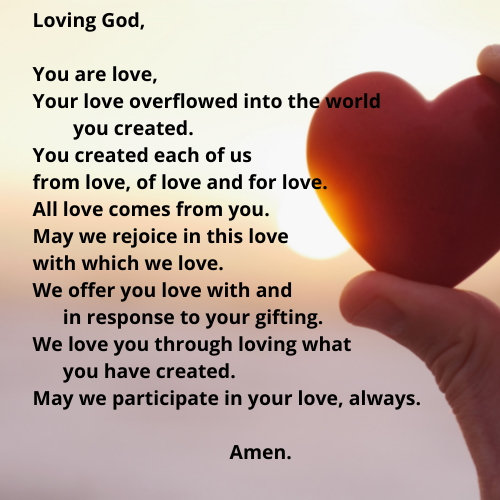
Jesus meets him where he is, in his knowledge of the law. In the same way, Jesus meets us wherever we are! Quoting from scripture, as we saw before, Jesus extricates from 613 Pharisaic laws that which is most important. And so we learn that love is what is most important, love of God and love of neighbour as ourselves. How often Jesus tells us this and yet how hard it is to live this in all circumstances.
The scribe recognises that Jesus has used the traditional teachings of Moses to answer. He has listened openly enough to be convinced even though his role may have led him not to listen at all and to defend or voice a different point of view. Contrary to expectations, the scribe recognises that what Jesus says is wise. He has overcome his bias. We are invited to overcome our biases and truly hear different points of view. We need the willingness
to receive what is offered, yet there is the freedom to not necessarily agree and to come to a place where there is space for understanding.
What is deep in my heart when I come to God with questions?
How do my biases or preconceptions influence my acceptance or rejection of another’s motivations or point of view?
How do I come to recognise my biases?
Am I prepared to move to a new openness to what is presented by those who differ from me?
Will I listen to Jesus as the scribe did?