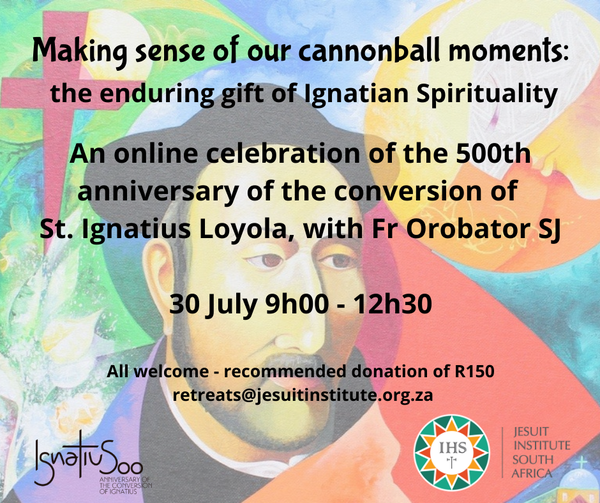
This week which ends on 31st July, the Feast of St Ignatius of Loyola, is the last week of the Ignatian Year: The 500th anniversary year of the conversion of St Ignatius. A good moment, perhaps to reflect on what conversion means for us.
For those unfamiliar with St Ignatius, or Inigo as he was originally called, his conversion began when the trajectory of his life was completely changed by an injury on the battlefield. He was leading a Spanish group of soldiers in battle at a place called Pamplona when his leg was shattered by a cannonball.
Prior to this moment his energies had been directed towards achieving fame and status in the society of the nobility in which he moved. God was very much on the periphery of his awareness. He was vain and fiercely proud and had great worldly ambitions for his life.
In the days after the injury, he was in bed for many long months, in considerable pain while his leg healed. In the end boredom drove him to read the only two books available in his home in the castle at Loyola, a Life of Christ and a life of the Saints.
He continued to daydream about his previous ambitions and especially how he wanted to win the heart of a noble lady, far above his rank, through his daring and courageous exploits in battle. His reading also began to spark daydreams of the great things he would like to do for God, such as St Frances and St Dominic had done. He noticed that while both fantasies excited him it was those about
doing great things for God that left him with a lasting sense of joy and peace.
And so, God began little by little to turn his heart and mind towards new desires. Over the months of his recovery he realised that he wanted to give his life completely to God.
The “cannonball” moment had been a definitive moment that stopped the path his life has been on and gave him a lot of time to reflect and to allow God to work within him. But it was an unfolding journey and not a single moment.
Perhaps there have been significant moments in your life which changed your life. “Sliding door” moments when there were two paths that you could have chosen. Moments so significant they had to affect the way your life unfolded.
Perhaps there was a time over many months when you became aware that your life was changing - like Ignatius on his sick-bed as he grappled with the meaning of his life and sensed he was being invited onto a new path.
Conversions happen in different ways – in moments of great significance and in gradual clarities that emerge over time.
Perhaps take some time to reflect today:
Do I have one or more cannon-ball moments in my life? What were they and how did they change me for the better?
Where have I sensed the gradual nudging of God calling me to deeper conversion?