This past Sunday’s first reading from the prophet Isaiah is a heart-wrenching story of one who planted and tended a vineyard with great love and tenderness. He carefully selected the perfect spot: a fertile hillside. He dug the soil, clearing it of stones, and chose the best vines to plant. He built a tower and dug a press, doing all that was
possible to create the perfect conditions for the grapes to thrive and grow. But there were only sour grapes instead of the juicy grapes that should have come from all that care and labour. The disappointment, grief, and anger in the owner of the vineyard is palpable.
This is a striking image of God’s disappointment in the House of Israel. God’s lament: “What could I have done for my vineyard that I have
not done?” And out of that initial anguish, he threatens to withdraw his care from the vineyard that would only bear sour grapes despite all his efforts.
The Psalm is a beautiful response begging the God of hosts to relent and turn again and protect the vine God’s hand had planted. “Give us life that we may call upon your name, God of hosts bring us back, let your face shine on us, and we shall be
saved.”
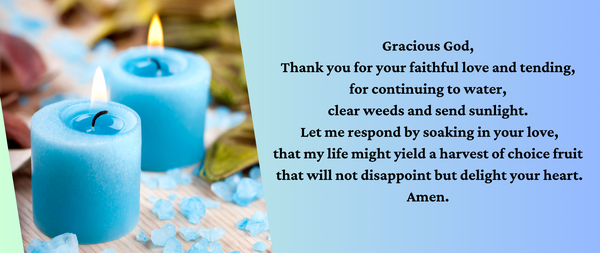
I wonder sometimes about how God feels about us today as his vineyard. God, the Giver of all good gifts, has given us everything we need to flourish as a vine. God created us in love and continues to create us and tends to us in every moment. Hoping that we will bear fruit that will be nourishing and tasty. It must be enormously painful to see how, despite God’s watering and constant tending, we so often
don’t allow ourselves to bear good fruit. We stay small, locked into our own fears and resentments, and are soured. Our lives are lived with petty jealousies, insecurities, and envy of those around us. If we allowed ourselves to soak in the water, sunlight, and nutrients of God’s love, then we and those around us would flourish.
How, today, can I allow myself to soak in God’s nurturing love? How can I
cooperate with the one who tends the vineyard and bear choice grapes?
Reflections by Annemarie Paulin-Campbell