During a recent virtual dialogue hosted by the Jesuit Institute, Fr David Neuhaus SJ, who has spent decades ministering in the Holy Land, acknowledged how difficult it is to discern
the truth about the deadly war in Gaza amid the constant flow of biased media reportage and some extreme social media posts.
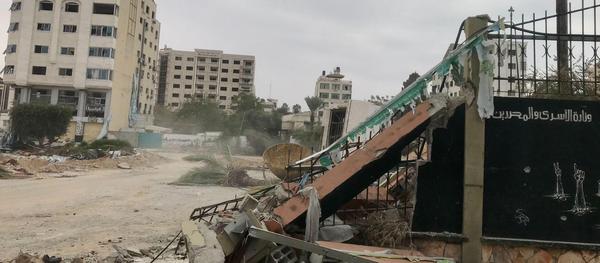
Having returned briefly to Israel from South Africa on October 8, the day after Hamas mounted its appallingly vicious attack, and as the Israeli Defence Force initiated its unprecedentedly brutal and indiscriminate bombing
campaign, Neuhaus encountered extreme levels of trauma and rage.
Truth, he discovered, had become the conflict's first victim, "put to death by the propaganda machines" seeking to legitimise the violence. And without truth, there is no basis for a just response to the conflict, let alone a lasting peace.
But how should a Christian discern the truth?
Neuhaus argued that a Christian's response should be informed primarily by what we know to be true: that every human being is created in the image and likeness of God and is equal in
God's eyes. "These are truths that we know and should be at the very heart of any words we speak about what is happening in Israel and Palestine today. And I think that it is a Christian mission and vocation to proclaim this loud and clear."
It is equally important, he said, to learn as much as possible about the pain and anxiety being felt by
those caught up in the war through exposing oneself to various sources of information, and not only sources that confirm preconceived ideas or reinforce deeply held prejudices.
Likewise, it is important to understand the roots of the conflict, which Neuhaus insists are not religious and are motivated, but instead, by a struggle between two
national movements over land, a struggle strongly magnified by decades of repression, occupation, settlement, and expulsion.
"This is not a war between some kind of theoretical entity called Judaism and some kind of theoretical entity called Islam. It's a clash between two modern national movements
that started to evolve at the end of the 19th century and came fully into their being in the 20th century: that is Zionism, or Jewish nationalism, and Palestinian nationalism."
Having listened and sought to understand, it is essential also to pray, including prayers asking God to reveal to us "what our prejudices are" so that any response is
motivated by a genuine desire for justice and peace. From this posture of prayerful discernment, Christians would be in a better place to discover how to speak out using words that "sow justice, peace, equality, pardon"—words that open up the horizon rather than building walls.
"When we are emotional, and when we are manipulated by people
telling us certain aspects of the truth, rather than the whole truth, words will flow out of us that could cause even greater harm. We must, thus, be very careful and watch our words."
In discerning his own response to the Gaza war, Neuhaus repeatedly turns to the prayer Pope Francis prayed in 2014, when he invited Palestinian Authority President Mahmoud Abbas and Israeli President Shimon Peres to the Vatican for an evening of peace prayers. It reads:
We know and we believe that we need the help of God.
We do not renounce our responsibilities, but we do call upon God in an act of supreme responsibility before our consciences and before our peoples.
We have heard a summons and we must respond.
It is the summons to break the spiral of hatred and violence and to break it by one word alone: the word, 'brother' ('sister').
But to be able to utter this word, we have to lift our eyes to heaven and acknowledge one another as children of one Father.