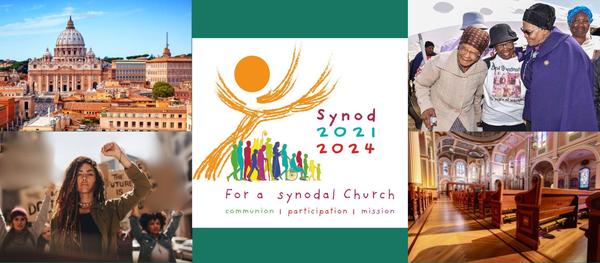
Next week, the second session of the XVI Ordinary General Assembly of the Synod of Bishops will meet in Rome (2-27 October). A worldwide consultation was held prior to the first session
in October 2023. A number of issues, including the role of women in the church, and specifically ordination to the diaconate, were discussed. It has been a discussion for many years now, not something that was recently flagged.
Many women – and men! – believe that the church should restore the admission of women to the diaconate. We have
Scriptural evidence that women were deacons in the early Church – St. Paul writes (Romans 16:1) to the Church in Cenchreae about “Phoebe the deacon”.
Pope Francis established two commissions to study the question of women deacons – in 2016 and in 2020. There has been no official report back on the findings of these commissions. Last week, the
Vatican announced that the issue would not be on the agenda for the second session of the Synod.
Many people thought that Pope Francis would take this issue seriously after studying it and listening to the issues raised in the first session of the Synod. Surprisingly, this has not happened. In an interview in May 2024, the pope seemed to close the door to women being deacons. He was asked if a little girl growing up now would have the opportunity to be a deacon and participate in the clergy. He responded by saying: “No”.
Many women feel disillusioned with the church. They ask why there has been no report on the commissions and why the issue has been dropped from the Synod. They wonder why a women’s diaconate was studied, thinking it was being taken seriously. It is as if this has been buried again. However, for many, it will not go away despite the Vatican seemingly shutting it down again.
Last month, at the bi-annual plenary of the Southern African Catholic Bishops’ Conference, Archbishop Buti Tlhagale addressed gender-based violence in South Africa. He then went on to speak about the question of women in the church.
“We
might not be beating up our wives, but we do something to women, and women feel strongly about it, and we are not doing anything about it,” the archbishop said. “Deep down, they are calling us names because we exclude them.”
Archbishop Tlhagale went on to say that the church readily accepts women into churches, and they are “the majority
in any community”. He that, despite this, “there is an inbuilt prejudice against women among the Catholic clergy, and I don’t think we’re going to do much about it now.”
“Women are friendly and sympathetic to clergy, but deep down, some articulate anger that we have excluded them from ordination,” he said.
Ordaining women to the diaconate will not solve all the clergy problems in the church, granted. However, if we take Scripture seriously, we cannot but admit that women played a pivotal role in proclaiming the resurrection. They were deacons in the early church. Women today can contribute considerably to church ministry by preaching and celebrating some sacraments.
Women who are angry about how the church has handled this issue are justified in their anger. No good and caring parent would do this to their children – invite discussion and study, then, seemingly, shut them down.