I recently came across a quote that I had saved in March of 2020, at a time when Covid-19 was waging war:
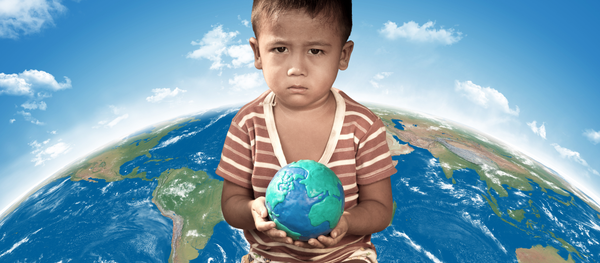
“Later that night, I held an atlas in my lap, ran my fingers across the whole world and whispered, ‘Where does it hurt?’ It answered – ‘everywhere,
everywhere’” — Warsan Shire
It felt so appropriate then — and it still does, six years later. In recent months and weeks, the steady stream of global events — conflict, political uncertainty, environmental crises, and the growing visibility of human suffering — has become almost impossible to ignore. News arrives quickly and persistently,
often in the quiet moments of our day. And I notice this: these events do not remain distant headlines. They settle quietly within the body. There is a subtle emotional weight that accumulates — an undercurrent of sadness, concern, and at times a sense of helplessness. I notice it in my own life; I hear the impact in the counselling room. The world can feel both deeply connected and profoundly fragile.
From a pastoral perspective, I’m so aware that we do not only think about what is happening — we carry it. I carry it. I hesitate to call this a weakness. Rather, it is an embodied capacity to care.
As we approach Holy Week, we are drawn again
into the story of Christ moving toward suffering — not avoiding it, not fixing it, but entering it. There is something profoundly gentle and honest in this movement. Jesus does not rush past pain. He does not explain it away. He does not numb himself to it. He remains present. He witnesses. He walks alongside.
Perhaps this offers us
another way of being in the world. We cannot attend to every crisis. We cannot hold every story fully. We cannot fix what is unfolding globally. But we can tend to how we are in the world. Perhaps we can ask:
What is mine to carry — and what is not?
Where do I need to soften — and where do I need to rest?
How do I stay open without becoming overwhelmed?
Holy Week does not rush us to resolution. It invites us to stay with the story — with betrayal, uncertainty, grief, and waiting. In a world that often demands quick answers and strong positions, this can feel unfamiliar. But perhaps this is the quiet invitation to remain human. To remain tender. To resist both numbing and despair. To explore what sustainable compassion means.
The world may whisper, “everywhere, everywhere.”
And yet, in the midst of that, Holy Week reminds us that God meets us there. In the suffering. In the uncertainty. In the quiet, faithful act of staying present. From the pain of the cross to the
hope of Resurrection Sunday, we are reminded that even the darkest places hold the possibility of new life.
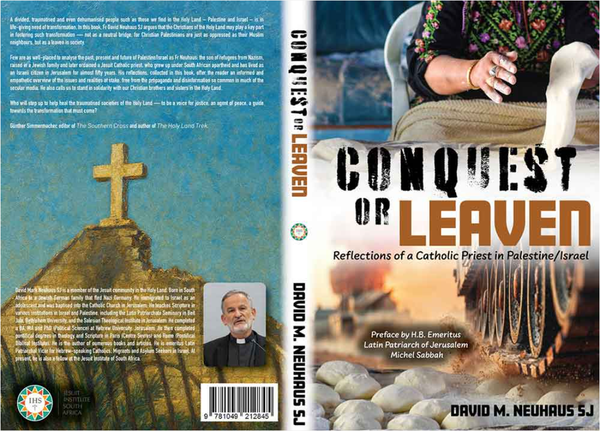
Conquest or Leaven: Reflections of a Catholic Priest in Palestine/Israel is available from the Jesuit Institute South Africa at R220.00 per copy. Please email [email protected] to place your order.